
Latest News
Second phase of construction of Qosh Tepa canal inaugurated

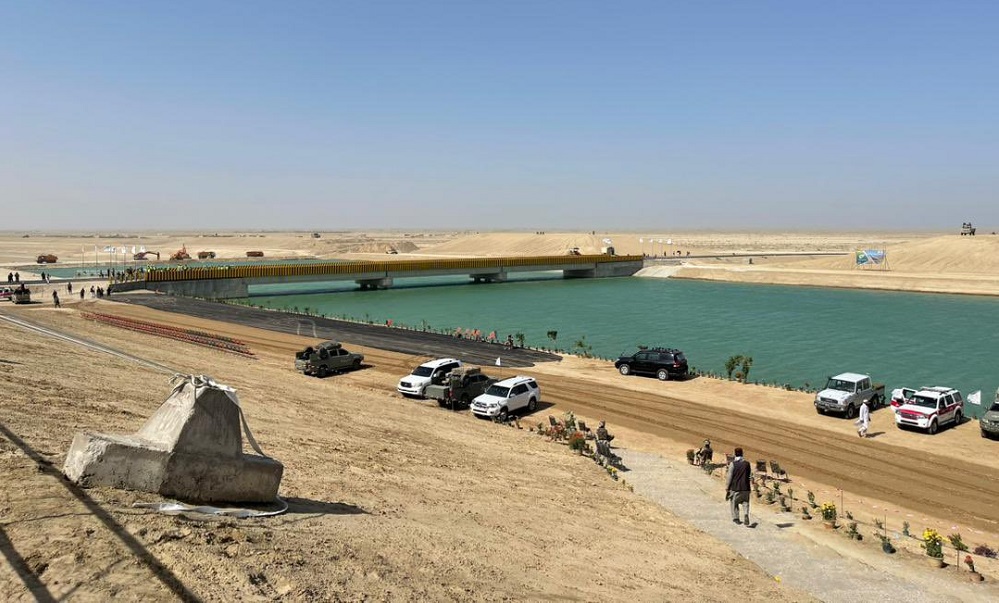
The second phase of construction of Qosh Tepa irrigation canal in northern Afghanistan was inaugurated on Wednesday in the presence of senior officials of the Islamic Emirate.
At a ceremony officials of the Islamic Emirate said neighboring countries should not worry about the creation of the canal because their rights will be respected and Afghanistan will use only the share it is entitled to from Amu River.
“We will release the water that is standing now. We will inaugurate the bridge. We will also inaugurate the second phase, which is 65 kilometers long from here,” Mullah Abdul Ghani Baradar, economic deputy of the prime minister, said.
Acting Minister of Interior Affairs Sirajuddin Haqqani said: “We are pleased to come here for the start of the second phase of Qosh Tepa. Please accept that we are all united for rebuilding Afghanistan. If it is the government or the people, we are all united.”
Officials assured countries like Tajikistan, Uzbekistan and Turkmenistan that the project will not harm them and their rights will be ensured.
Abdul Salam Hanafi, administrative deputy of the Prime Minister, said: “Others should not worry that we will push the entire Amu River to this side. Inshallah, we respect the rights of our neighbors and we want friendly, good and close relations with all neighbors.”
Mohammad Yaqub Mujahid, Acting Minister of Defense, said: “We will never violate the rights of the neighboring countries that they have from the Amu River, and we will not interfere in anyone’s rights. But at the same time, we want to get our rights and no one should create obstacles in this regard.”
Officials of the Islamic Emirate emphasized that the door for diplomatic talks is open to the countries that are concerned and that this is the first time in history that Afghanistan uses water from Amu River.
Sher Mohammad Abbas Stankzai, political deputy of the Ministry of Foreign Affairs, said: “We again assure [everyone] that if our neighbors are concerned in this regard, we are ready to talk to them through diplomatic channels and exchange our delegations. Let’s sit together and resolve their concerns diplomatically.”
Qosh Tepa canal is of great economic importance for Afghanistan because it can turn Afghanistan into a food production hub in the region.
Attaullah Omari, Acting Minister of Agriculture and Livestock, said: “This will be a canal that will make us self-reliant in the food sector. We will have food independence. We will no longer need to import from neighbors. We will no longer have various diseases and plant and animal pests.”
Officials of the Islamic Emirate said at the ceremony that the government is determined to manage all the waters of the country.





Latest News
Afghanistan Humanitarian Fund channeled $73.5 million to the needy in 2025
Operating in a context of limited resources and growing needs, the fund played a key role in ensuring life-saving aid reached vulnerable communities, including women, men and children affected by crises.
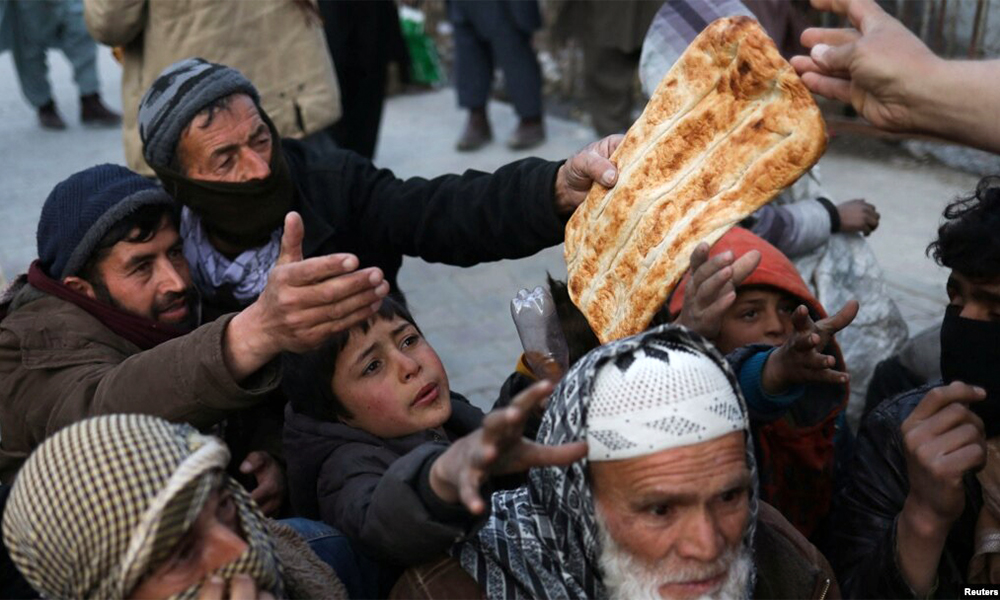
The Afghanistan Humanitarian Fund (AHF) delivered critical assistance across Afghanistan in 2025, as the country faced ongoing humanitarian pressures including displacement, natural disasters and climate-related shocks, according to its latest annual report.
Operating in a context of limited resources and growing needs, the fund played a key role in ensuring life-saving aid reached vulnerable communities, including women, men and children affected by crises such as earthquakes and cross-border returns.
The AHF said its flexible funding mechanisms allowed for rapid response and anticipatory action, while also supporting longer-term humanitarian programmes aligned with the Humanitarian Needs and Response Plan.
During the year, the fund allocated $73.5 million through eight targeted disbursements. The funding was directed toward both emergency situations and protracted humanitarian needs, enabling assistance to reach millions of people across the country.
Particular focus was placed on communities impacted by displacement, climate-related events and natural disasters, as humanitarian agencies sought to address the most urgent needs amid continuing economic and environmental challenges.
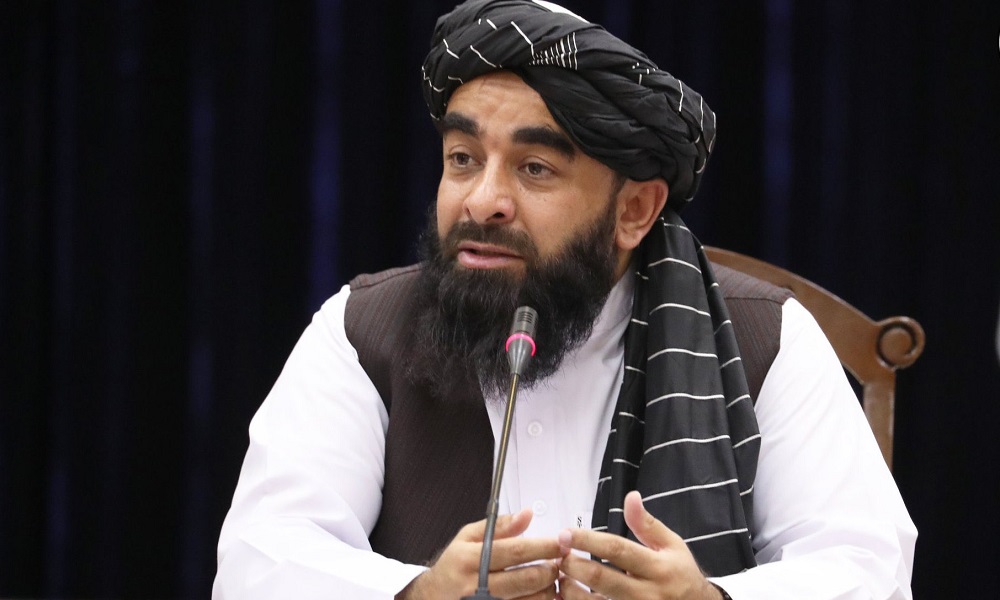
The spokesperson for the Islamic Emirate of Afghanistan, Zabihullah Mujahid, has strongly denied claims that members of the administration maintain ties with Al-Qaeda.
Responding to media reports on an ongoing analytical project mapping over 1,200 IEA officials by the Middle East Institute, Mujahid issued an audio statement and described the allegations as inaccurate. He also said they were “firmly rejected.”
He said the Islamic Emirate has no need to maintain relations with transnational groups, adding that such claims misrepresent the current situation in Afghanistan.
Mujahid also argued that reports of this nature are intended to mislead public opinion and generate negative narratives about the Islamic Emirate.
Latest News
CSTO, UN stress ‘Afghanistan factor’ in Central Asia security discussions
They also emphasized closer coordination with UN bodies to strengthen regional responses to emerging threats.
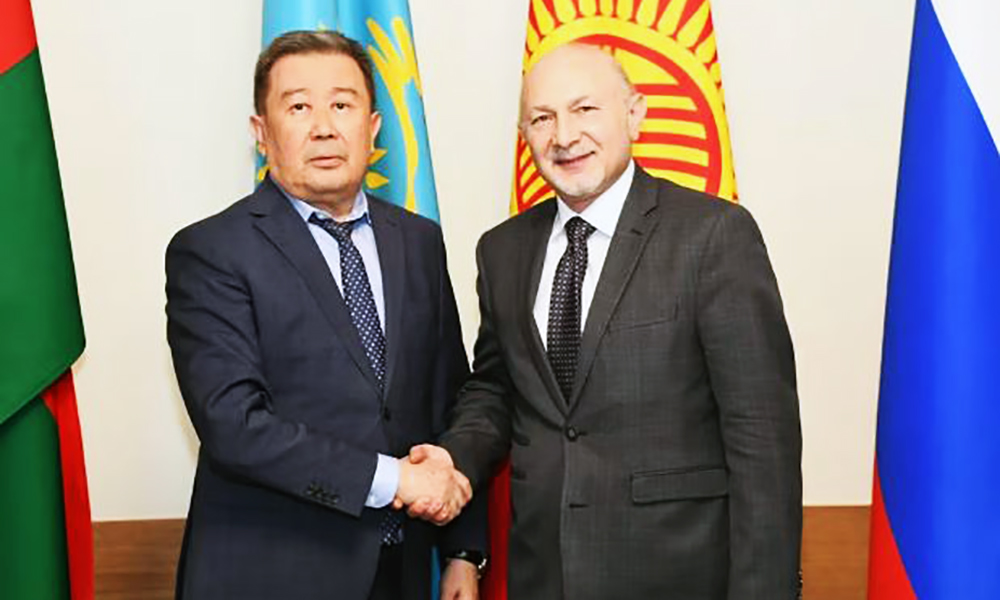
Officials from the Collective Security Treaty Organization (CSTO) and the United Nations have underscored the significance of the “Afghanistan factor” in regional stability during talks held in Moscow.
The meeting brought together CSTO Deputy Secretary General Samat Ordabayev and Kaha Imnadze, Special Representative and head of the UN Regional Centre for Preventive Diplomacy for Central Asia.
Discussions focused on evolving security dynamics across Central Asia, with particular attention to developments linked to Afghanistan.
According to the CSTO, both sides highlighted the importance of sustained monitoring of the situation in Afghanistan, alongside preventive measures aimed at addressing potential risks.
They also emphasized closer coordination with UN bodies to strengthen regional responses to emerging threats.
In a statement, the CSTO said that “ongoing monitoring of the impact of the Afghanistan factor on regional peace and security, as well as preventive actions to counter emerging threats, remain key priorities.”
The talks come amid repeated assurances from the Islamic Emirate of Afghanistan that its territory will not be used to threaten other countries and that border security remains under control.
At the same time, some analysts suggest that continued references to the “Afghanistan factor” in regional forums may reflect wider political dynamics, including efforts to shape engagement with Kabul.
Separately, CSTO Secretary General Talatbek Masadykov has indicated that a broader security meeting involving Afghanistan and Central Asian states is expected later this year, with participation from the Shanghai Cooperation Organisation and the Commonwealth of Independent States.


Afghanistan showcases industry at key Central Asia expo

Webinar series highlights growing climate pressures on livelihoods in Afghanistan

Afghanistan Humanitarian Fund channeled $73.5 million to the needy in 2025

UAE seeks US financial backstop amid Iran war fallout, warns of possible shift from dollar

Ceasefire under strain after U.S. seizes Iranian cargo ship

IEA supreme leader orders replacement of foreign terminology in official documents

Russia deems US military presence in Afghanistan unacceptable

Afghanistan hosts inaugural Afghanistan–Central Asia Consultative Dialogue to strengthen regional cooperation

TAPI gas pipeline advances 25 km in Afghanistan

Afghani strengthens nearly 10% against US dollar amid banking sector reforms

Tahawol: Fragile ceasefire between Iran and US discussed

Saar: Fate of Kabul–Islamabad talks in China reviewed

Tahawol: Reasons behind re-blocking of Strait of Hormuz discussed

Tawsia: Uzbekistan’s interest in investing in Afghanistan discussed

Tahawol: Russia’s readiness to mediate between Kabul-Islamabad discussed
-

 Business4 days ago
Airspace transit fees generate revenue for Afghanistan as flight routes shift
-
 Business3 days ago
Afghanistan moves toward self-sufficiency in car battery production
-

 Business4 days ago
Central Asia, Afghanistan crank up Russian fuel imports as MidEast supplies dry up
-

 International Sports5 days ago
IPL 2026: Chennai Super Kings cruise past Kolkata Knight Riders
-
 Latest News5 days ago
Kabul faces deepening water crisis as supplies dwindle and demand surges
-
 Regional5 days ago
Iran’s Foreign Minister meets Pakistani Army Chief in Tehran amid mediation efforts
-
 Latest News5 days ago
UN says aid to Afghans remained steady despite funding pressures in 2025
-
 Latest News5 days ago
IEA FM discusses recent Kabul–Islamabad talks in China with Saudi ambassador